


ABOUT
CHENGLIN LI

NAME:
Chenglin Li
ROLE:
Computational Artist, Designer & Entrepreneur
INDUSTRY:
Art Industry
COUNTRY:
USA


UNOFEX Interview with Chenglin Li: Art, Design and Emerging Technologies
In this UNOFEX interview, Chenglin Li shares her journey from design into computational art, revealing how algorithms, artificial intelligence and digital fabrication have become central to her creative language. Working across generative systems, interaction design, emerging media and material experimentation, Li explores how technology reshapes perception, authorship and human experience.
UNOFEX is pleased to feature Chenglin Li, a computational artist, designer, and entrepreneur whose interdisciplinary practice explores the evolving relationship between human creativity, algorithmic systems, and emerging technologies. Working across generative art, artificial intelligence, digital fabrication, interaction design, and contemporary visual culture, Li investigates how technology reshapes perception, authorship, and the ways we experience the world.
With academic foundations from New York University and the University of California, Berkeley, and professional experience with global companies including NOV and SLB, Li brings together artistic experimentation, systems thinking, and human-centered design. Her work has received international recognition through awards such as the Red Dot Design Award, iF Design Award, International Design Awards, Creative Communication Awards, Grand Prix du Design Paris, and other major design honors.
Her artworks and projects have been exhibited internationally at renowned venues including the Carrousel du Louvre in Paris, Palazzo Albrizzi-Capello in Venice, Artexpo New York, CICA Museum in South Korea, and galleries across London, New York, Italy, and beyond. Through works such as Algorithmic Genome, Post-Human Bloom, OceanLung, MELTING, and Breezy, Li examines transformation, emergence, ecological awareness, and the increasingly blurred boundaries between organic and synthetic systems.
In this UNOFEX interview, Chenglin Li shares insights into her creative journey, her collaboration with algorithms, the influence of global exhibitions and international recognition, and her perspective on the future of computational art, design, and human–machine collaboration.

FROM DESIGN TO CODE
Q1. Chenglin, could you briefly introduce yourself and tell us how your journey led you from design into computational art and emerging technologies?
I am a computational artist, designer, and entrepreneur whose work explores how algorithmic systems reshape perception, visual culture, and human experience. I hold degrees from New York University and the University of California, Berkeley, with a background spanning design, technology, and emerging media. My work has been exhibited internationally and recognized through multiple international design and innovation awards, reinforcing my interest in the intersection of computation, creativity, and culture. My practice evolved into computational art through a shift in how I engage with technology, not as a tool for executing fixed ideas, but as a set of generative systems, including algorithms, artificial intelligence, and digital fabrication, that actively participate in the creative process. Projects such as MELTING, a Red Dot Design Award-winning exploration of material transformation, OceanLung, recognized by the Grand Prix du Design Paris for its environmental storytelling, and Breezy, an iF Design Award-winning respiratory training concept for children, reflect this systems-based approach.
Q2. Was there a particular moment, experience, or project that made you realize that technology could become a central part of your artistic language?
A pivotal moment in my practice occurred while developing Algorithmic Genome, a real-time generative artwork created in Max (Cycling ’74). By designing systems that could generate their own evolving outcomes, I shifted from creating fixed compositions to exploring emergence through computation. Watching complex behaviors arise from simple rules made me realize that computation was more than a medium. It became a language for exploring growth, adaptation, and transformation. That realization continues to shape my work today.
Q3. Your practice brings together computational systems, generative art, and contemporary visual culture. How would you describe the central idea that connects these different areas in your work?
The central idea connecting my work is emergence and the evolving relationship between organic and synthetic systems. I am interested in how complex forms, behaviors, and meanings arise through interactions between humans, algorithms, materials, and environments. Whether I am working with generative code, artificial intelligence, interactive installations, or digitally fabricated structures, I explore systems that produce outcomes greater than the sum of their individual components. These systems challenge conventional ideas of authorship, agency, and creativity while raising questions about how technology influences perception and decision-making.


ALGORITHMS AS COLLABORATORS
Q4. Your work often explores the relationship between human creativity and machine-generated systems. How do you personally experience the collaboration between yourself and the algorithm?
I view algorithms as collaborators rather than tools. My role is not to determine every outcome, but to design, structure, and curate the systems, rules, and conditions from which possibilities emerge. The process functions as a dialogue: I establish a framework, observe how the system responds, and refine it over time. The algorithm contributes variation and unpredictability, while I provide intention, context, and critical judgment. In this way, creativity becomes an interaction between human intuition and computational processes rather than an act of complete control.
Q5. In works such as Algorithmic Genome, MELTING, OceanLung, and Breezy, there is a strong sense of transformation, emergence, and the connection between organic and synthetic forms. What ideas or emotions do you hope viewers experience when encountering these works?
I hope viewers experience curiosity, reflection, and connection. While each project explores different themes and technologies, they collectively examine how humans relate to increasingly complex technological, environmental, and material systems. In Algorithmic Genome, I explore how computational processes generate forms that resemble natural growth and adaptation using particle systems, procedural behaviors, and generative structures. I hope audiences feel a sense of wonder about the parallels between biological and computational systems and how complexity can emerge from simple rules. With MELTING, I use a zero-waste knitwear system and water-soluble embroidery that gradually dissolves and reshapes the garment to explore transformation as a metaphor for memory, impermanence, and adaptation. OceanLung and Breezy both use breathing as an interface between the body and technology. OceanLung translates ocean deoxygenation data into a physical breathing experience to foster empathy for marine ecosystems, while Breezy transforms respiratory training into an engaging interaction that supports children’s wellbeing through participation and emotional connection. Together, these works invite reflection on the boundaries between natural and artificial systems and how emerging technologies can deepen understanding, empathy, and awareness of our relationship with the world.
Q6. Many of your projects blur the boundary between the natural, the artificial, and the post-human. Why is this boundary important to you as an artist?
I believe the boundary between the natural and the artificial is becoming increasingly blurred as technologies such as artificial intelligence, wearable systems, and responsive materials become embedded in everyday life. My work explores this convergence through projects such as Post-Human Bloom and OceanLung, which combine biological inspiration, computational design, and physical interaction. OceanLung specifically uses a modified respirator to examine how humans, technology, and the environment increasingly shape one another. Through these works, I hope to encourage reflection on emerging forms of coexistence in a technologically mediated world.
Q7. Your works have been exhibited internationally in places such as Paris, Venice, New York, London, Budapest, South Korea, and Italy. How has this international exposure influenced your development and confidence as an artist?
International exhibitions have been incredibly meaningful because they have allowed my work to engage with audiences from diverse cultural and professional backgrounds. Exhibiting at venues including the Carrousel du Louvre and Halle des Blancs-Manteaux in Paris, Palazzo Albrizzi-Capello in Venice, Artexpo New York, Golden Duck Gallery in Budapest, the CICA Museum in South Korea, Matera Casa Cava in Italy, and galleries in London demonstrated that the ideas explored in my work resonate across different cultural and geographic contexts. Audience responses to themes such as human-machine collaboration, ecological awareness, and technological transformation have reinforced the global relevance of my work. Presenting internationally has provided exposure to diverse perspectives and expanded the scope of my practice. This recognition has strengthened my commitment to interdisciplinary work across art, design, science, and technology, demonstrating that such projects can contribute meaningfully to contemporary cultural discourse and engage global audiences.
Q8. You have received recognition from several major international design awards, including the Red Dot Design Award, iF Design Award, International Design Awards, Creative Communication Awards, and Grand Prix du Design Paris. What does this recognition mean to you personally and professionally?
Professionally, these recognitions have validated the value of interdisciplinary work that combines design, technology, research, and creative experimentation. What is particularly meaningful to me is that each award recognized a very different type of project. MELTING received the Red Dot Design Award for its exploration of material transformation through a zero-waste knitwear system, Breezy received the iF Design Award for reimagining respiratory training for children, OceanLung was recognized by the Grand Prix du Design Paris for translating ocean deoxygenation data into an embodied environmental experience, Sofar received recognition from the International Design Awards for exploring human connection through interactive furniture, and iTranquil — Beyond Driving received the Creative Communication Awards for reimagining the vehicle as a digital wellness ecosystem in collaboration with BMW Group and the Jacobs Institute for Design Innovation. These awards across sustainability, healthcare, mobility, and interaction design demonstrate that impactful innovation emerges at the intersection of disciplines. They have also increased the visibility of my work within international design and global communities.

THE FUTURE OF CREATIVE AI
Q9. Beyond your artistic practice, you also work as Design Lead at Evokai and have worked with global companies such as NOV and SLB. How has your professional experience in design and industry influenced your creative process?
My professional experience has significantly shaped how I think about systems, communication, and human interaction. Through my work with organizations such as NOV and SLB, and collaborations across the global technology and energy sectors, I have observed how large-scale systems influence decision-making, perception, and behavior. This same philosophy influenced iTranquil — Beyond Driving, my award-winning collaboration with BMW Group and the Jacobs Institute for Design Innovation. The project reimagined the vehicle as a digital wellness ecosystem, transforming existing digital technologies into a restorative user experience. Although the industries differ, the underlying challenge was similar to my work in energy technology: translating complex systems into meaningful human experiences. This approach also informs projects such as MELTING, Breezy, and OceanLung, which apply systems thinking across material transformation, healthcare, and environmental awareness. This exposure to large-scale systems, real-time data, and human-centered communication has led me to focus on the broader systems shaping contemporary life, where my artistic and professional practices inform one another.
Q10. As an interdisciplinary artist working between art, design, technology, and entrepreneurship, what challenges have shaped your artistic voice the most?
A key challenge in my practice has been working across art, design, technology, and entrepreneurship, which often operate with different goals, languages, and expectations. Over time, I found that the most meaningful ideas emerge at their intersections. Navigating both industry and creative environments has shaped my approach, grounded in systems thinking, technical understanding, and visual storytelling. I view technology and creativity as interconnected, and this perspective defines my artistic voice.
Q11. Your work reflects important contemporary questions about artificial intelligence, authorship, perception, and human–machine collaboration. How do you see the role of computational art evolving in the coming years?
I believe computational art will play an increasingly important role in helping society understand the cultural and human implications of emerging technologies. As artificial intelligence and algorithmic systems become more embedded in daily life, artists will make these systems more visible, interpretable, and open to reflection. Looking ahead, I expect the boundaries between digital and physical media to continue dissolving, with computational processes influencing fields from fabrication to architecture and environmental design.
Q12. Looking ahead, what kind of impact would you like your work to have on the future of art, technology, and visual culture?
I hope my work contributes to a broader understanding of how humans engage creatively and responsibly with emerging technologies. Rather than viewing technology solely as a tool, I explore its potential as a medium for connection, reflection, and cultural dialogue.
GALLERY

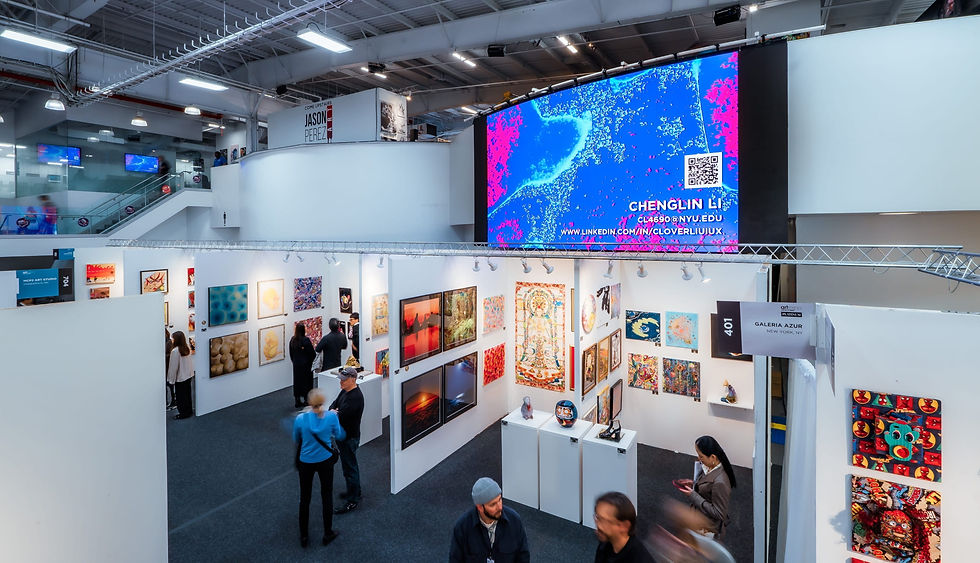


AWARDS & HIGHLIGHTS
Highlight I: Received Design Awards:
Red Dot Design Award
iF Design Award
Creative Communication Awards (C2A)
International Design Awards (IDA)
Grand Prix du Design Paris
MUSE Design Awards
London Design Awards
French Design Awards
European Product Design Award
Vega Digital Awards
Indigo Design Award
NY Product Design Awards
Highlight II: Artwork exhibited at:
Carrousel du Louvre — Paris, France
Artexpo New York — New York, USA
Palazzo Albrizzi-Capello — Venice, Italy
CICA Museum — Gimpo, South Korea
Halle des Blancs Manteaux — Paris, France
Casa Cava — Matera, Italy
Boomer Gallery (Tower Bridge) — London, United Kingdom
Dodomu Gallery — Brooklyn, New York, USA
Gallery NAT — London, United Kingdom
Golden Duck Gallery — Budapest, Hungary


